
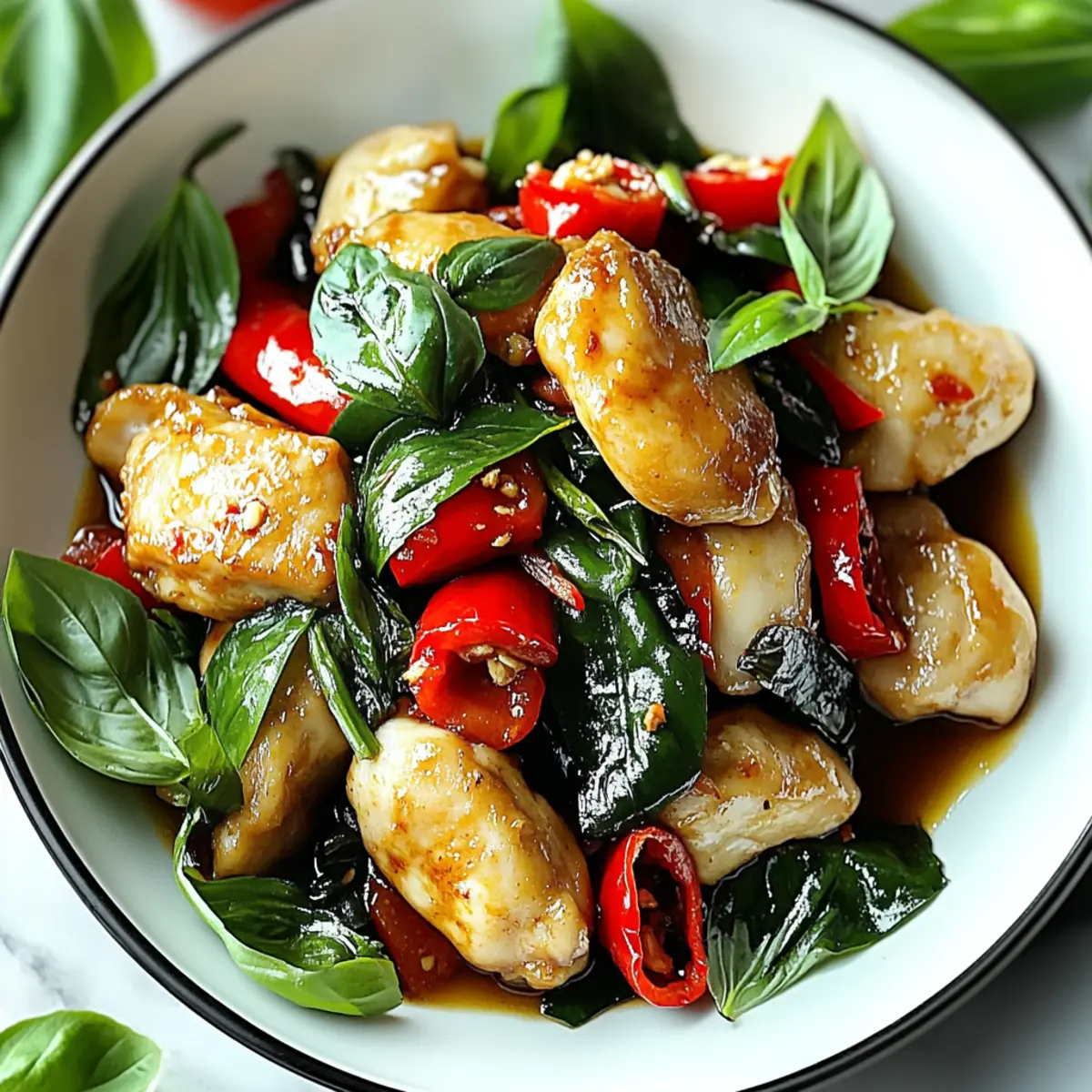


Just the other evening, as the aroma of sizzling garlic wafted through my kitchen, I was transported straight to a bustling street market in Thailand. The dish? Thai Basil Chicken, or Pad Krapow Gai, a beloved staple that’s both quick to whip up and loaded with savory goodness. In just 30 minutes, you can create a meal that not only satisfies those hunger pangs but also feeds your soul, thanks to its vibrant blend of spices and fresh basil. It’s perfect for busy weeknights—ideal for anyone looking to move away from fast food without sacrificing flavor. Are you ready to experience the joy of cooking this delicious dish at home? Let’s dive into the recipe together!
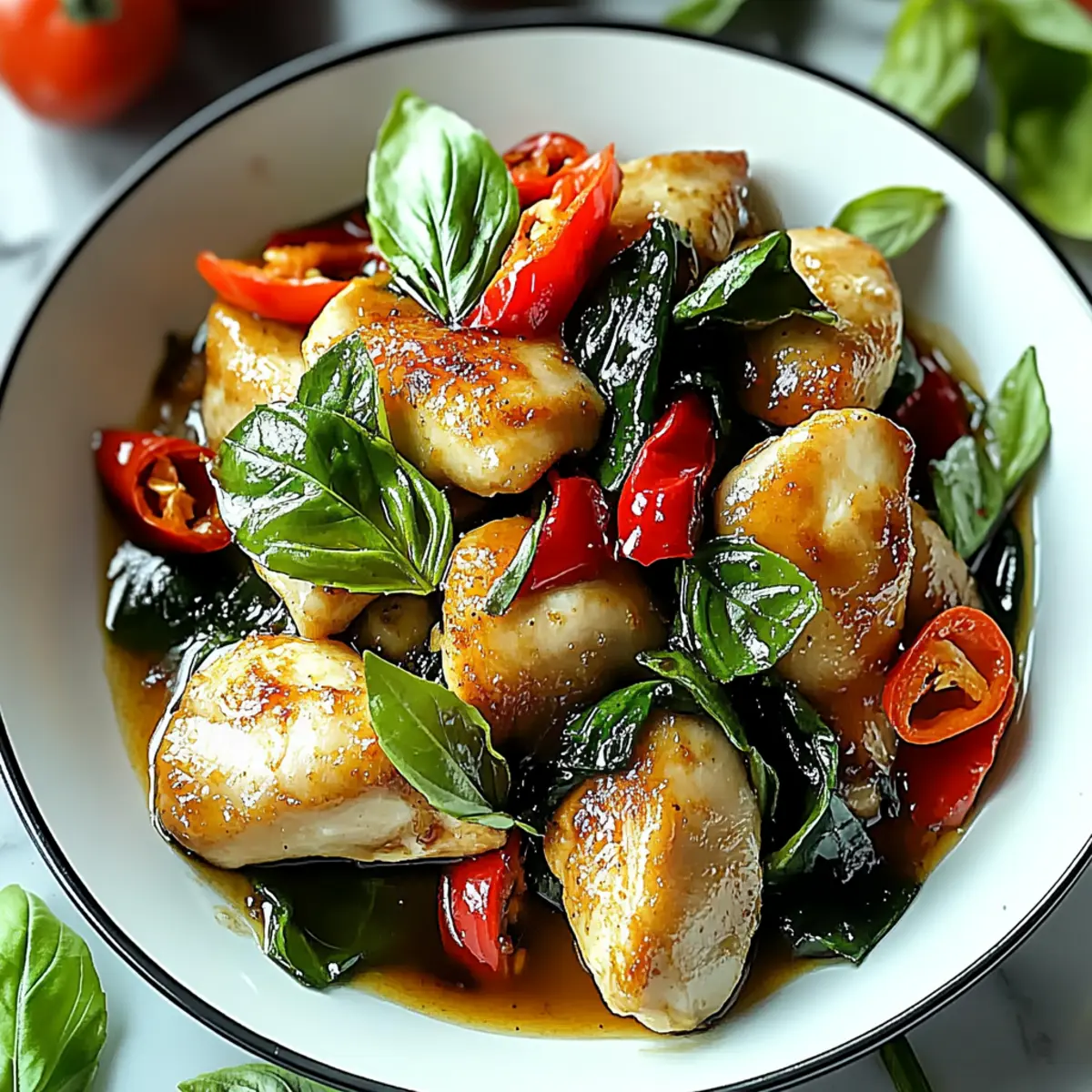
Why is Thai Basil Chicken a must-try?
Quick and easy: This Thai Basil Chicken recipe comes together in just 30 minutes, making it perfect for busy weeknights.
Savory explosion: With its rich combination of garlic, oyster sauce, and fresh basil, each bite bursts with flavor that will tantalize your taste buds.
Healthy option: At around 400 calories per serving, it’s a guilt-free meal that doesn’t compromise on taste—great for those mindful of their diet.

Customizable: Feel free to swap in tofu or add your favorite veggies, ensuring this dish suits your personal palate perfectly.
Cultural experience: Cooking Pad Krapow Gai is not just about food; it’s a step into the vibrant world of Thai street cuisine right from your home!
Thai Basil Chicken Ingredients
For the Chicken
• Boneless, Skinless Chicken Thighs – Juicy and tender meat that absorbs flavor well. Substitution: Can replace with boneless, skinless chicken breasts; adjust cooking time to prevent dryness.
For the Sauce
• Oyster Sauce – Adds umami depth. Substitution: Hoisin sauce or vegetarian oyster sauce.
• Soy Sauce – Provides salty complexity. Ensure using low-sodium soy sauce if desired.
• Fish Sauce – Adds depth and oceanic flavor. Substitution: Vegan alternatives are available, or can be omitted.
• Sugar – Balances savory flavors with sweetness. Substitution: Brown sugar or honey can be used.
• Chicken Broth – Thin out the sauce and enhance flavor. Substitution: Vegetable broth for a vegetarian version.
For the Vegetables
• Vegetable Oil – High smoke point oil used for frying and sautéing without burning. Substitution: Can use canola or peanut oil.
• Garlic (4 cloves, minced) – Adds pungency and depth. No substitutions needed outside of garlic powder in a pinch (approx. 1/4 teaspoon).
• Shallots (2, thinly sliced) – Provide sweetness and balance to the dish. Substitution: Red onion can be used for a similar taste.
• Red Chili (1, sliced) – Introduces heat; adjust amount based on spice preference. Note: Remove seeds for a milder flavor.
• Bell Pepper (1 cup, sliced) – Sweetness and crunch, enhancing texture. Substitution: Any color bell pepper or snap peas can work.
• Fresh Thai Basil Leaves (1 cup) – Key flavor ingredient providing a floral, peppery aroma. Substitution: Sweet basil can be used but may alter flavor profile.

Step‑by‑Step Instructions for Thai Basil Chicken
Step 1: Heat the Oil
In a large skillet or wok, heat 2 tablespoons of vegetable oil over medium-high heat until shimmering, which should take about 1-2 minutes. This oil will serve as the base for your Thai Basil Chicken, creating a perfect backdrop for the aromatic ingredients to follow.
Step 2: Sauté the Aromatics
Add 4 cloves of minced garlic and 2 sliced shallots to the hot oil, stirring continuously for about 1 minute until they turn fragrant and light golden brown. Be cautious to avoid burning the garlic, as its vibrant flavor is crucial to the dish.
Step 3: Brown the Chicken
Carefully add 1 pound of boneless, skinless chicken thighs to the pan in a single layer. Sear them for about 5–7 minutes, turning occasionally until they are golden-brown and cooked through. This browning will add depth and flavor to your Thai Basil Chicken.
Step 4: Incorporate the Vegetables
Once the chicken is browned, mix in 1 sliced red chili and 1 cup of sliced bell pepper. Sauté these vegetables for an additional 2-3 minutes, allowing them to soften slightly while retaining their vibrant colors. This step enhances both the flavor and texture of the dish.
Step 5: Prepare the Sauce
In a small bowl, whisk together 1 tablespoon of oyster sauce, 1 teaspoon of soy sauce, 1 teaspoon of fish sauce, 1/4 cup of sugar, and 1/4 cup of chicken broth until well combined. Pour this sauce mixture over the chicken and vegetables in the skillet, stirring to ensure everything is evenly coated.
Step 6: Simmer Together
Lower the heat to medium and let the mixture simmer for about 2-3 minutes, stirring occasionally to meld the flavors. You’ll notice the sauce thickening slightly, enhancing the savory-sweet profile of the Thai Basil Chicken as it comes together.
Step 7: Add the Fresh Basil
Toss in 1 cup of fresh Thai basil leaves and stir until they just wilt, which should take about 1 minute. The aromatic basil will infuse the dish with a fresh and peppery flavor that is essential to the authenticity of Pad Krapow Gai.
Step 8: Final Seasoning and Serve
Taste your Thai Basil Chicken and adjust seasoning if necessary, adding salt and pepper to suit your palate. Serve this delightful dish over a bed of fluffy jasmine rice, allowing the sticky sauce to enhance each grain, while promising a satisfying meal that’s bursting with flavor.
Make Ahead Options
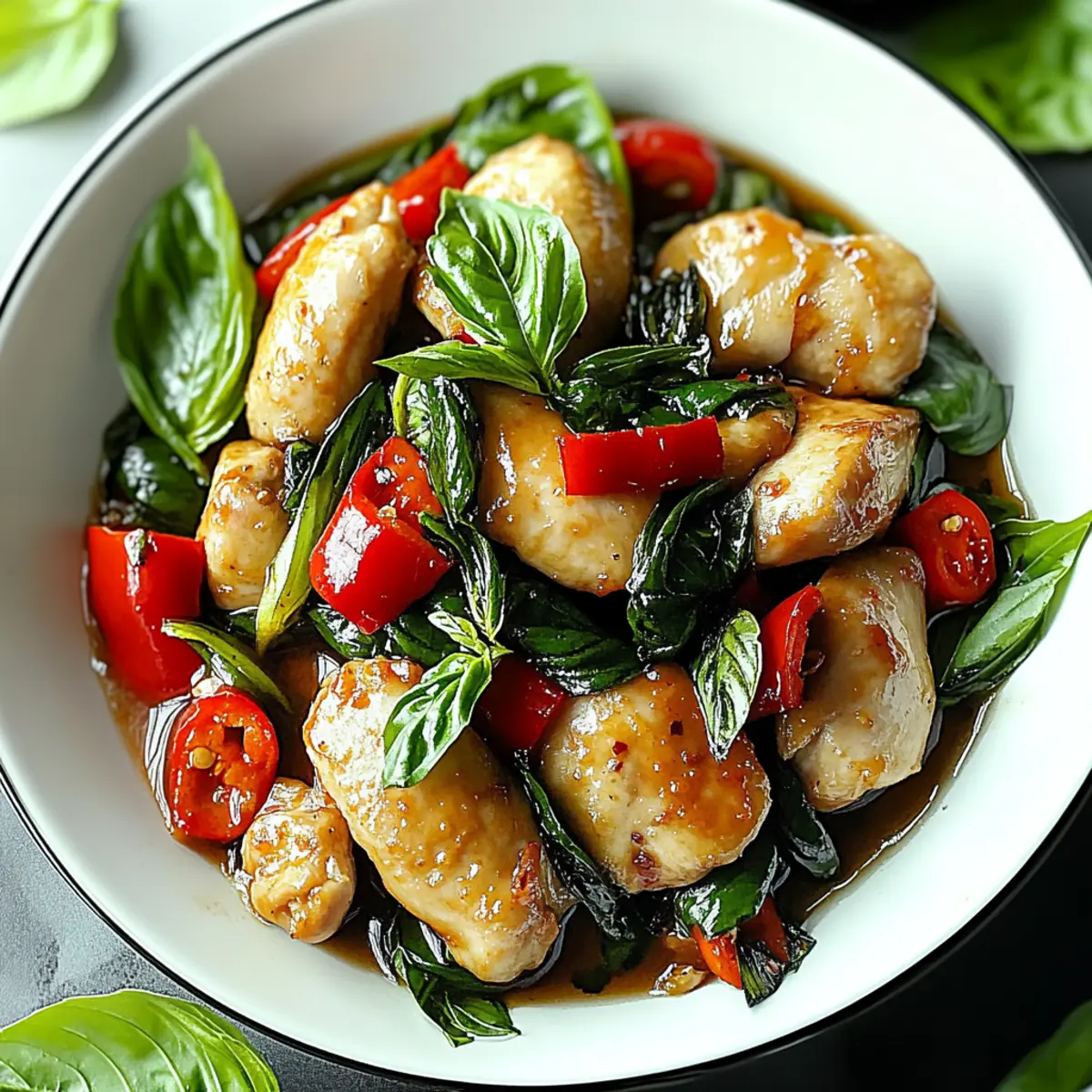
These Thai Basil Chicken meal prep tips will save you precious time during busy weeknights! You can chop the vegetables (garlic, shallots, red chili, and bell pepper) and store them in an airtight container in the fridge for up to 3 days, ensuring they stay fresh and ready to toss into the pan. Additionally, you can mix the sauce ingredients ahead of time and refrigerate for 24 hours. When you’re ready to enjoy your homemade Thai Basil Chicken, simply sauté the prepped ingredients and follow the standard cooking steps. This way, you’ll have a delicious, restaurant-quality dish with minimal effort and time—perfect for a quick and satisfying meal!
Thai Basil Chicken Variations & Substitutions
Feel free to make this dish your own with these delightful twists and swaps that cater to your unique taste preferences.
- Dairy-Free: Use coconut aminos instead of soy sauce for a gluten-free alternative that adds a subtle sweetness.
- Spice Level: Increase the heat by adding extra red chilies or a splash of chili paste for those who crave a spicy punch!
- Vegetarian: Replace chicken with tofu or tempeh for a satisfying plant-based meal. Just be sure to marinate the tofu beforehand for extra flavor.
- Extra Veggies: Toss in additional vegetables like zucchini or snap peas to amplify nutrition and texture. Each bite will be a delightful medley!
- Citrus Twist: Squeeze fresh lime juice over the dish before serving for a zesty finish that brightens all the flavors perfectly.
- Thai Side Dishes: Pair it with a simple cucumber salad or some jasmine rice noodles for a complete meal to truly capture the essence of Thai cuisine.
- Ginger Kick: Add some minced ginger to the garlic in Step 2 for a fragrant touch that enhances the savory depth of the dish.
Don’t forget that your culinary adventure is all about experimenting. Happy cooking!
What to Serve with Thai Basil Chicken
Enhance your culinary experience with delightful accompaniments that complement the bold flavors of this aromatic dish.
-
Steamed Jasmine Rice: The fragrant, fluffy rice is perfect for soaking up the savory sauce, creating a harmonious balance with the Thai Basil Chicken.
-
Crispy Spring Rolls: These crunchy bites provide a satisfying contrast to the tender chicken, filled with fresh vegetables and served with a sweet dipping sauce.
-
Garlic Cucumber Salad: Crisp and refreshing, this salad adds a cool element to the meal, balancing the dish’s heat with its zesty dressing and fresh herbs.
-
Stir-Fried Vegetables: A colorful mix of broccoli, carrots, and snap peas adds nutrition and crunch. It’s an excellent way to incorporate more fresh elements into your dinner.
-
Thai Iced Tea: This sweet and creamy drink is a soothing counterpoint to the bold flavors of the chicken, making your meal feel more authentic and enjoyable.
-
Coconut Sticky Rice: A dessert that offers a creamy sweetness, making it an indulgent finish after savoring the spicy and salty notes of the Thai Basil Chicken.
Indulging in these pairings ensures a satisfying meal that elevates your dining experience!
How to Store and Freeze Thai Basil Chicken
Fridge: Store leftovers in an airtight container for up to 3 days. This will keep your Thai Basil Chicken flavorful and ready to enjoy on a busy day.
Freezer: Freeze in a well-sealed, freezer-safe container for up to 2 months. Be sure to cool the dish before freezing to preserve texture and taste.
Reheating: For best results, reheat in a pan over medium heat until warmed through. This method helps maintain the dish’s delightful texture and flavor profile.
Thawing: When ready to eat, thaw overnight in the fridge. This way, your Thai Basil Chicken will be ready to enjoy in no time!
Tips for the Best Thai Basil Chicken
• Watch the Heat: Keep your cooking temperature moderate to prevent burning the garlic, which is essential for flavor.
• Cook Thoroughly: Ensure that the chicken is cooked through and slightly browned for the best tasting Thai Basil Chicken.
• Taste as You Go: Adjust the spice level by varying the amount of red chili; don’t hesitate to taste during cooking to achieve your desired heat.
• Fresh is Key: Use fresh Thai basil for the best aroma and flavor; if you have to substitute, be aware it may alter the taste profile.
• Customize Your Dish: Feel free to add extra veggies or protein substitutes for a personal twist; make this dish truly yours!
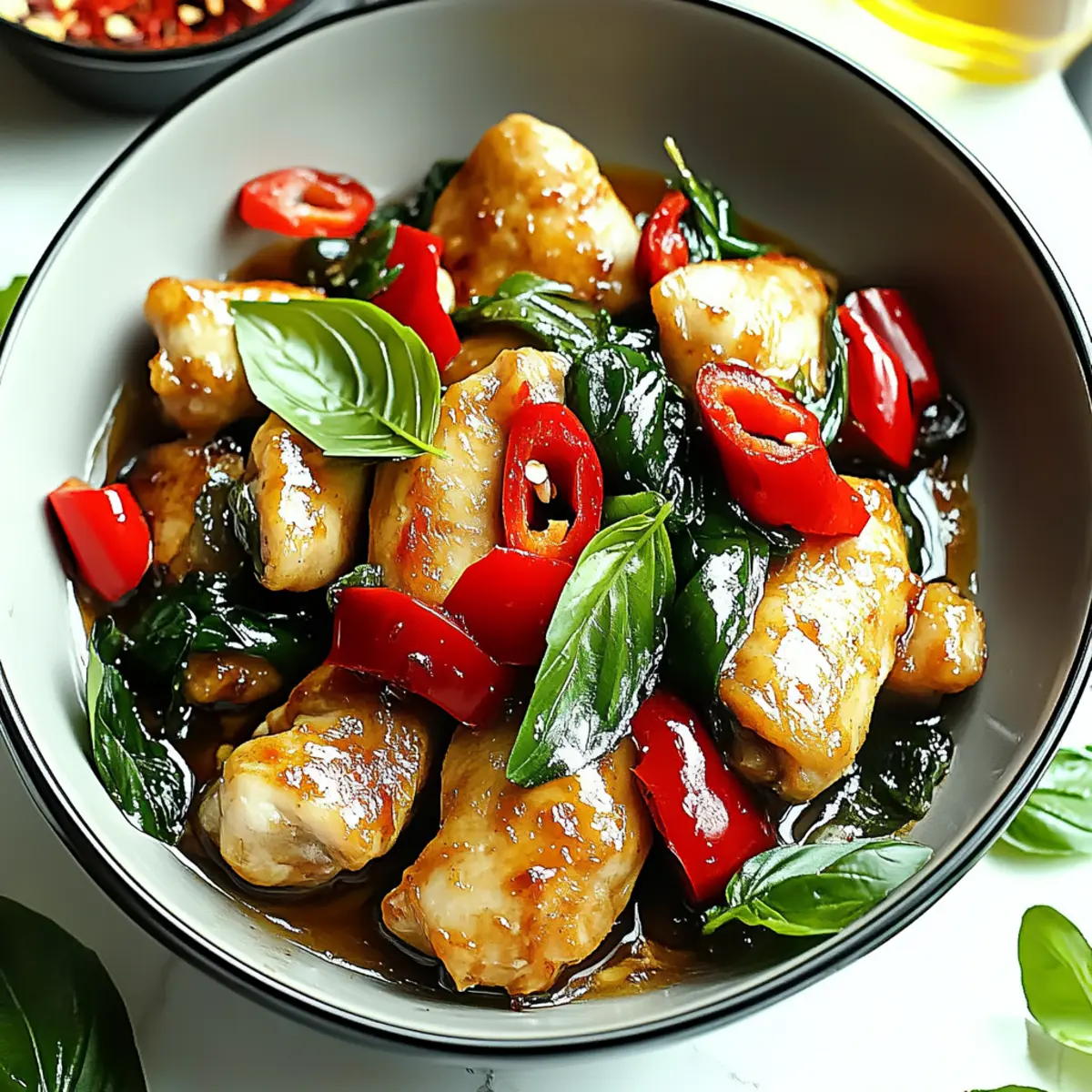
Thai Basil Chicken Recipe FAQs
How do I choose the right chicken for Thai Basil Chicken?
Absolutely! I recommend using boneless, skinless chicken thighs for their juiciness and ability to absorb flavors beautifully. If you prefer, you can substitute with boneless, skinless chicken breasts; just keep an eye on the cooking time, as they tend to dry out faster—cook until just done, about 5-6 minutes.
What’s the best way to store leftovers of Thai Basil Chicken?
Very! Store leftovers in an airtight container in the refrigerator for up to 3 days. To preserve its delicious flavor, I suggest reheating in a skillet over medium heat, as this helps retain the delightful texture known in authentic Thai cuisine.
Can I freeze Thai Basil Chicken?
Absolutely! To freeze, let your Thai Basil Chicken cool completely, then transfer it to a freezer-safe container. It can be kept frozen for up to 2 months. When you’re ready to enjoy, thaw in the refrigerator overnight and reheat in a pan for the best results.
What should I do if my sauce is too salty?
If your sauce turns out too salty, don’t fret! You can add a splash of water or more chicken broth to dilute it. Alternatively, stirring in a bit of sugar can balance out the saltiness. Taste your dish as you go and make adjustments to find your perfect flavor balance.
Is this dish safe for my kids and pets?
Yes, but with caution! Thai Basil Chicken is kid-friendly; just adjust the spice level to your child’s taste by using less chili. However, keep in mind that ingredients like garlic and onion should be moderated for pets as they can upset their tummies. Always consult your vet for safety!
How can I make this dish vegetarian-friendly?
Very easily! Substitute chicken with tofu or tempeh, ensuring to press and drain thoroughly before cooking to avoid excess moisture. Additionally, use vegetable broth instead of chicken broth, and consider adding more vegetables like broccoli or snap peas to enhance both nutrition and flavor in your vegetarian Thai Basil Chicken.
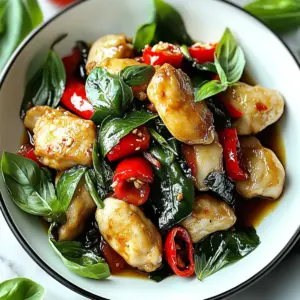
Savory Thai Basil Chicken Made in 30 Minutes or Less
Equipment
- large skillet
- Wok
- Small bowl
Ingredients
For the Chicken
- 1 pound Boneless, Skinless Chicken Thighs Can replace with boneless, skinless chicken breasts; adjust cooking time to prevent dryness.
For the Sauce
- 1 tablespoon Oyster Sauce Can substitute with hoisin sauce or vegetarian oyster sauce.
- 1 teaspoon Soy Sauce Use low-sodium soy sauce if desired.
- 1 teaspoon Fish Sauce Vegan alternatives are available; can be omitted.
- 1/4 cup Sugar Brown sugar or honey can be used.
- 1/4 cup Chicken Broth Vegetable broth can be used for a vegetarian version.
For the Vegetables
- 2 tablespoons Vegetable Oil Can use canola or peanut oil.
- 4 cloves Garlic (minced) Can substitute with garlic powder in a pinch (approx. 1/4 teaspoon).
- 2 Shallots (thinly sliced) Red onion can be used for a similar taste.
- 1 Red Chili (sliced) Adjust amount based on spice preference; remove seeds for milder flavor.
- 1 cup Bell Pepper (sliced) Any color bell pepper or snap peas can work.
- 1 cup Fresh Thai Basil Leaves Sweet basil can be used but may alter flavor profile.
Instructions
Step‑by‑Step Instructions for Thai Basil Chicken
- Heat the oil in a large skillet or wok over medium-high heat until shimmering, about 1-2 minutes.
- Add minced garlic and sliced shallots to the hot oil, stirring continuously for about 1 minute until fragrant and light golden brown.
- Add the chicken thighs to the pan in a single layer. Sear for about 5-7 minutes, turning occasionally until golden-brown and cooked through.
- Mix in sliced red chili and sliced bell pepper. Sauté for an additional 2-3 minutes until slightly softened.
- In a small bowl, whisk together oyster sauce, soy sauce, fish sauce, sugar, and chicken broth until well combined. Pour this sauce over the chicken and vegetables, stirring to coat.
- Lower the heat to medium and let the mixture simmer for about 2-3 minutes, stirring occasionally to meld the flavors.
- Toss in fresh Thai basil leaves and stir until they just wilt, about 1 minute.
- Taste and adjust seasoning if necessary, adding salt and pepper. Serve over jasmine rice.