



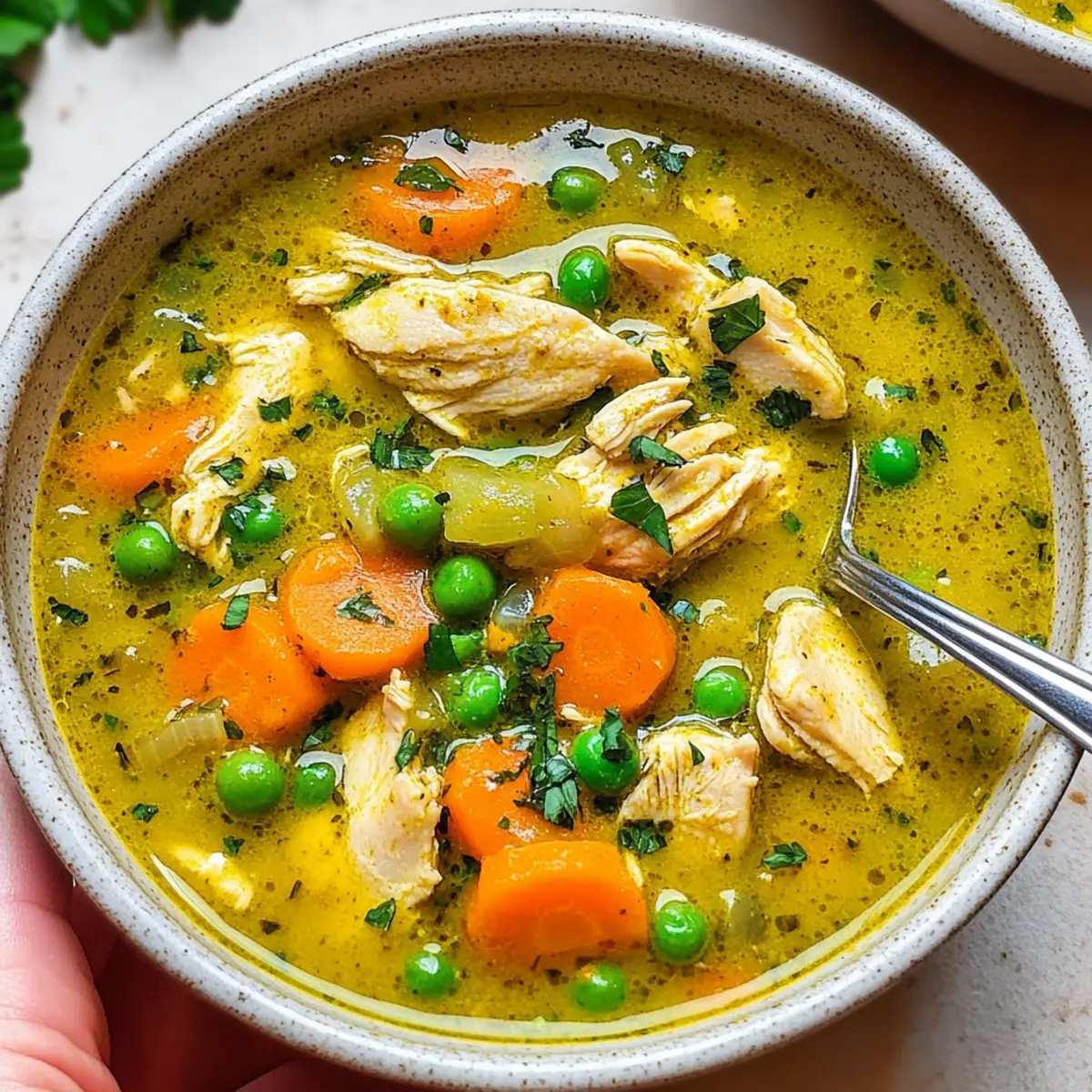
As the chilly breeze swirls outside, there’s nothing quite like wrapping your hands around a bowl of steaming soup to warm both the body and soul. This Anti Inflammatory Turmeric Chicken Soup offers that comforting embrace, filled with tender chicken, vibrant veggies, and the golden goodness of turmeric to bring you a nourishing experience. Perfect for those days when you crave something wholesome yet effortlessly quick to prepare, this one-pot wonder is also gluten-free, dairy-free, and has a delightful paleo-friendly twist. Plus, if you’re leaning towards a plant-based option, I’ve got you covered with easy vegetarian alternatives! Curious to uncover how this soup can steal the show at your next meal? Keep reading!

Why Is This Soup So Special?
Nourishing blend of spices and veggies: Packed with vibrant produce and the anti-inflammatory properties of turmeric, this soup not only warms you up but supports your health.
Flexibility at its finest: Whether you’re a meat lover or prefer a vegetarian approach, you can easily adapt this soup with beans, lentils, or your choice of proteins.
Quick and Easy: Made in just one pot, it’s perfect for busy weeknights or meal prep, making your efforts hassle-free.

Crowd-pleaser: Its rich, hearty flavor appeals to everyone at the table, ensuring no one goes home hungry. For even more meal ideas, don’t forget to check out my customizable soup options!
Anti Inflammatory Turmeric Chicken Soup Ingredients
Get ready to dive into the delightful flavors of this nourishing soup!
For the Soup Base
- Chicken – Provides protein; boneless skinless thighs yield a juicier flavor.
- Leeks – Adds a mild onion-like taste; substitute with fennel or green onions if preferred.
- Carrots – Brings natural sweetness and nutrients; no substitutions necessary.
- Celery – Introduces aromatic layers; chop finely for a smoother texture.
- Peas – Offers a pop of color and sweetness; frozen peas work perfectly here.
- Chicken Broth – Serves as the heart of the soup; high-quality broth enhances flavor.
For Creaminess and Flavor
- Coconut Milk – Adds creaminess; can be replaced with cashew cream or omitted for a lighter soup.
- Turmeric – Infuses the soup with anti-inflammatory benefits; perfectly balanced with other spices.
For Seasoning

- Spices (salt, pepper, etc.) – Essential for flavor enhancement; adjust according to your taste preferences.
This Anti Inflammatory Turmeric Chicken Soup is a wonderfully versatile dish that you can customize based on your tastes or dietary needs. Enjoy the process of crafting this heartwarming recipe!
Step‑by‑Step Instructions for Anti Inflammatory Turmeric Chicken Soup
Step 1: Prepare Ingredients
Begin by gathering and chopping your fresh ingredients for the Anti Inflammatory Turmeric Chicken Soup. Finely slice 2 leeks, chop 2 carrots and 2 celery sticks, and dice 1 pound of boneless skinless chicken thighs. Having everything prepped will streamline your cooking process, ensuring you have a smooth flow while you create this nourishing soup.
Step 2: Sauté Vegetables
In a large pot, heat 2 tablespoons of olive oil over medium heat. Once the oil is shimmering, add the chopped leeks and celery, sautéing for about 3-4 minutes until they soften and turn translucent. The fragrances will start to fill your kitchen, enhancing the soup’s base as the veggies gently caramelize, setting the perfect foundation for the rest of your ingredients.
Step 3: Add Spices
Stir in 1 tablespoon of turmeric, along with a pinch of salt and pepper, and cook for an additional minute. This brief cooking time allows the spices to bloom, releasing their flavors and creating a fragrant aroma. Watch the vibrant yellow hue transform the vegetables, giving your Anti Inflammatory Turmeric Chicken Soup a beautiful color that promises warmth and nourishment.
Step 4: Incorporate Chicken
Add the diced chicken to the pot, stirring well to coat it with the sautéed vegetables and spices. Cook the chicken for around 5-7 minutes until it starts to brown slightly on the outside, stirring occasionally. The chicken should be opaque and fragrant, contributing to the overall heartiness of the soup as you prepare to add the broth.
Step 5: Add Remaining Ingredients
Pour in 4 cups of high-quality chicken broth and 1 cup of coconut milk, followed by the chopped carrots and 1 cup of frozen peas. Bring everything to a gentle boil over medium-high heat, stirring occasionally. The mixture will begin to bubble, and the vibrant colors of the veggies and chicken will unify, creating a delightful medley of flavors.
Step 6: Simmer
Reduce the heat to low, cover the pot, and let the soup simmer for about 30 minutes. This gentle cooking process allows the chicken to fully cook through and the flavors to meld beautifully. You’ll know it’s ready when the chicken is tender and the vegetables are soft but still vibrant in color, making for a comforting bowl of soup.
Step 7: Shred Chicken
After simmering, carefully remove the chicken from the pot and shred it using two forks. Return the shredded chicken back into the soup, stirring it through so that it integrates with the broth and vegetables. This step enhances the soup’s texture and ensures every bowl is filled with tender chicken pieces and hearty goodness.
Step 8: Adjust Seasoning
Before serving, taste the soup and adjust seasoning if necessary. You may want to add more salt, pepper, or a dash of additional turmeric for an extra kick. Once you have your flavors balanced, serve the Anti Inflammatory Turmeric Chicken Soup hot, letting the warmth of the spices and ingredients cozy up your soul.

Make Ahead Options
These Anti Inflammatory Turmeric Chicken Soup is perfect for meal prep enthusiasts! You can chop and prepare all the vegetables (leeks, carrots, celery) and chicken up to 24 hours in advance, storing them in airtight containers in the refrigerator to keep them fresh and prevent browning. The soup can also be assembled without cooking the chicken; simply refrigerate the prepared broth, coconut milk, and vegetables for up to 3 days. When you’re ready to enjoy the soup, just sauté the veggies, cook the chicken, and follow the remaining steps to heat and finish your soup for that comforting, homemade taste, all with minimal effort on busy weeknights.
What to Serve with Anti Inflammatory Turmeric Chicken Soup
This nourishing soup pairs beautifully with a variety of delightful sides, making your meal both satisfying and wholesome.
- Crusty Whole Grain Bread: The hearty texture complements the soup’s warmth perfectly and is great for dipping.
- Fresh Arugula Salad: A peppery salad brightens up the meal, providing a refreshing contrast to the rich soup. Toss with lemon vinaigrette for a zing!
- Roasted Veggies: Seasonal vegetables roasted to caramelized perfection add depth and a sweet earthiness to your plate.
- Quinoa: Adds a nutty flavor and boosts the protein content, making the meal even more filling. Serve it alongside or stir into the soup!
- Avocado Toast: Creamy, added healthy fats enhance the soup’s nutritional profile while offering a delicious taste experience.
- Coconut Rice: Infused with coconut flavor, this creamy side echoes the silkiness of the soup and brings a delightful tropical twist.
- Chia Seed Pudding: A light and nutritious dessert, providing a sweet end that complements the savory soup while staying health-focused.
- Ginger Tea: A calming beverage with warmth and spice, it rounds out your meal with soothing properties that match the soup’s essence.
Enjoy experimenting with these pairings to create a truly memorable dining experience!
How to Store and Freeze Anti Inflammatory Turmeric Chicken Soup
Fridge: Store the soup in airtight containers for up to 5-6 days. Make sure to cool it completely before sealing to maintain freshness.
Freezer: Soup can be frozen for up to 4 months. Portion into freezer-safe containers or bags, leaving some space for expansion during freezing.
Reheating: Thaw overnight in the fridge before reheating. Warm on the stovetop or in the microwave until heated through, stirring occasionally.
Avoiding Texture Loss: For best results, add any rice or pasta separately to the reheated soup to keep their texture intact when enjoying your Anti Inflammatory Turmeric Chicken Soup.
Helpful Tricks for Anti Inflammatory Turmeric Chicken Soup
-
Perfect Chicken: Avoid dryness by cooking chicken until just done; overcooking can lead to tough pieces.
-
Texture Matters: To keep rice or pasta from getting mushy, cook them separately and add just before serving your Anti Inflammatory Turmeric Chicken Soup.
-
Quality Counts: Opt for high-quality chicken broth; it significantly enhances the flavor of your soup.
-
Vegetarian Version: To adapt for non-meat eaters, replace chicken with cooked beans or additional seasonal vegetables for a satisfying option.
-
Boost Nutrients: Feel free to experiment with extra veggies like spinach or kale, adding nutrition and color to your soup while maintaining its vibrant appeal.
Anti Inflammatory Turmeric Chicken Soup Variations
Feel free to get creative and customize this delicious soup to suit your taste preferences or dietary needs!
-
Vegetarian: Omit the chicken and replace it with chickpeas or lentils for a protein-packed alternative.
It’s surprising how satisfying these legumes can be, adding heartiness and flavor to your bowl. -
Gluten-Free Grains: Swap out rice for quinoa or farro for a nutty twist.
These grains elevate the texture and also add a delightful chewiness that complements the soup beautifully. -
Pasta Lovers: Toss in your favorite gluten-free pasta to boost the heartiness of your soup.
Cooking the pasta separately keeps it from getting soggy and allows you to enjoy that perfect bite in every spoonful! -
Added Veggie Goodness: Mix in leafy greens like spinach or kale for extra nutrients and color.
The vibrant greens not only amp up the health factor but also enhance the visual appeal of your soup. -
Creamy Cashew Variant: Replace coconut milk with cashew cream for a rich, nutty flavor.
This swap enhances creaminess, making the soup even more luxurious while catering to those avoiding coconut. -
Spice Level: For a kick, add crushed red pepper flakes or fresh jalapeños to bring heat.
This addition transforms the comfort of the soup into a fiery delight, perfect for those chillier winter nights. -
Herb Infusion: Stir in fresh herbs like cilantro or parsley for a vibrant finish.
Their fresh notes brighten up the overall flavor and make each bowl feel like a cozy hug from nature! -
Zesty Lemon Twist: Add a splash of lemon juice just before serving for a refreshing zing.
The citrus brightens the flavors and enhances the overall warmth from the spices, making your soup sing!
These variations are perfect for customizing your Anti Inflammatory Turmeric Chicken Soup, ensuring every bowl is a personal delight. For more exciting ideas, check out my customizable soup options and make your cooking experience even more enjoyable!
Anti Inflammatory Turmeric Chicken Soup Recipe FAQs
How do I choose the right chicken for this soup?
Absolutely! For this recipe, boneless skinless chicken thighs are best as they yield a juicier flavor. However, if you prefer chicken breasts, those will work too. Always look for fresh chicken with no discoloration or unpleasant odor to ensure the best quality.
What is the best way to store leftover soup?
To store your Anti Inflammatory Turmeric Chicken Soup, let it cool completely before transferring it to airtight containers. It will keep well in the refrigerator for about 5-6 days. Just make sure to seal it tightly to prevent any spoilage or contamination.
Can I freeze the soup?
Very much so! You can freeze the Anti Inflammatory Turmeric Chicken Soup for up to 4 months. I recommend dividing it into individual portions in freezer-safe containers or bags. Be sure to leave some space for the soup to expand as it freezes, ensuring a perfect thawing experience later on.
What should I do if the soup is too thick?
If your soup turns out thicker than you’d like, simply add extra chicken broth or water a little at a time until you reach your desired consistency. Stir well, and allow it to heat through for about 5 minutes to meld the flavors back together. Taste and adjust seasoning if needed.
Are there any dietary considerations for this recipe?
Yes! This soup is inherently gluten-free and dairy-free. For vegetarian options, simply omit the chicken and substitute with beans or lentils for protein. Always check labels if you’re using packaged ingredients, like broth, to ensure they fit your dietary needs.
How can I tell if the chicken is fully cooked?
To ensure your chicken is fully cooked, it should reach an internal temperature of 165°F (75°C). If you don’t have a meat thermometer, the chicken should be opaque and no longer pink in the center. Shredding the chicken after cooking also helps, as you’ll see it’s tender and fully cooked through.

Nourishing Anti Inflammatory Turmeric Chicken Soup Recipe
Equipment
- large pot
Ingredients
For the Soup Base
- 1 pound boneless skinless chicken thighs yields a juicier flavor
- 2 leeks finely sliced; substitute with fennel or green onions if preferred
- 2 carrots chopped; no substitutions necessary
- 2 celery sticks chopped finely for a smoother texture
- 1 cup frozen peas offers a pop of color and sweetness
- 4 cups chicken broth high-quality broth enhances flavor
For Creaminess and Flavor
- 1 cup coconut milk adds creaminess; can replace with cashew cream or omit
- 1 tablespoon turmeric infuses the soup with anti-inflammatory benefits
For Seasoning
- salt and pepper adjust according to your taste preferences
Instructions
Step-by-Step Instructions
- Prepare Ingredients. Gather and chop your fresh ingredients, including leeks, carrots, celery, and chicken.
- Sauté Vegetables. In a large pot, heat olive oil and sauté leeks and celery for 3-4 minutes.
- Add Spices. Mix in turmeric, salt, and pepper, cooking for an additional minute.
- Incorporate Chicken. Add diced chicken and cook for 5-7 minutes until browned.
- Add Remaining Ingredients. Pour in chicken broth and coconut milk, then add carrots and peas.
- Simmer. Reduce heat and let the soup simmer for about 30 minutes.
- Shred Chicken. Remove chicken, shred it and return to the pot, mixing well.
- Adjust Seasoning. Taste and adjust seasoning if necessary before serving hot.